Published September 28, 2026
The short answer: Quintuple Steps are angled stepping platforms arranged as a moving balance challenge. To plan a backyard version, choose the intended users and location, allow room to approach and leave the obstacle, read the entire plan set, and check the materials and instructions before buying or cutting. Our Quintuple Steps PDF provides the drawings, tools, materials list, and illustrated assembly sequence for the project.
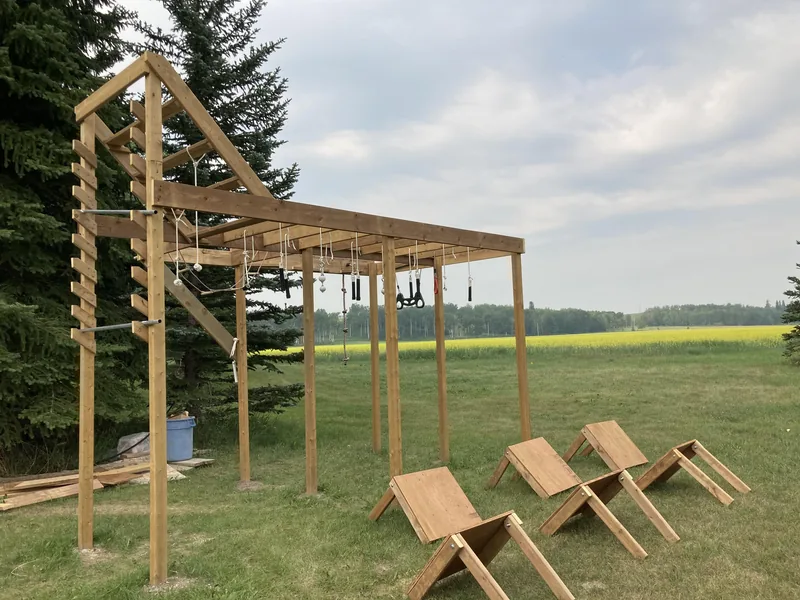
1. Choose the space and the people using it
Walk the route a person would take into, across, and out of the steps. Sketch the full movement area rather than measuring only the footprint of the platforms. Notice uneven ground, nearby walls or hard objects, drainage, and where a missed step could end. Keep younger users and adult athletes in mind as you decide whether this is the right obstacle and location for your household.
For family projects, review the U.S. Consumer Product Safety Commission’s home playground guidance on placement, protective surfacing, supervision, and ongoing inspection. That guidance is a useful planning reference; it does not certify this design or replace a site-specific assessment.
2. Read the complete plan set before buying materials
Our current Quintuple Steps download is a 10-page PDF with a tool list, materials list, diagrams, and illustrated assembly instructions. Look through all of it once before shopping, then follow the drawings alongside the written steps. Check each proposed quantity and measurement across the pages before making cuts. If a callout is unclear, ask us about it before you commit materials.
The plans describe one building project. Lumber, hardware, tools, ground preparation, and protective surfacing are sourced separately. Local requirements and the conditions of your yard may call for a qualified professional’s advice.
3. Build carefully, then check the finished obstacle
Use the plan’s sequence as your working reference. Keep cut and fastener information beside the drawings while you assemble, and verify that each part is stable before making the next one. After placing the steps, inspect the surfaces, edges, connections, and surrounding area before anyone uses them. Continue inspecting them as materials weather and the site changes.
Building and using obstacles carries a risk of injury. Adult supervision and a suitable landing area matter when children use a backyard course. The PDF is an informational plan set, not a structural certification or a guarantee that a particular installation is safe. Read the full disclaimer.
Common questions
Do the plans include the physical steps?
No. You receive a digital PDF. You obtain the materials and build the obstacle yourself.
Do I need the whole course plan to build Quintuple Steps?
No. The Quintuple Steps are sold as their own plan set. The Builder Bundle is an option if you also want the Warped Wall and Ultimate Course plans.
Can I use the same setup for kids and adults?
Consider the people who will use it before selecting a layout. This guide cannot establish one layout as suitable for everyone. Review the plan, space, supervision, and fall area for your own project.
Ready to look through the drawings?
The $39 Quintuple Steps PDF is delivered by a private email link after payment. Materials and construction are separate.